
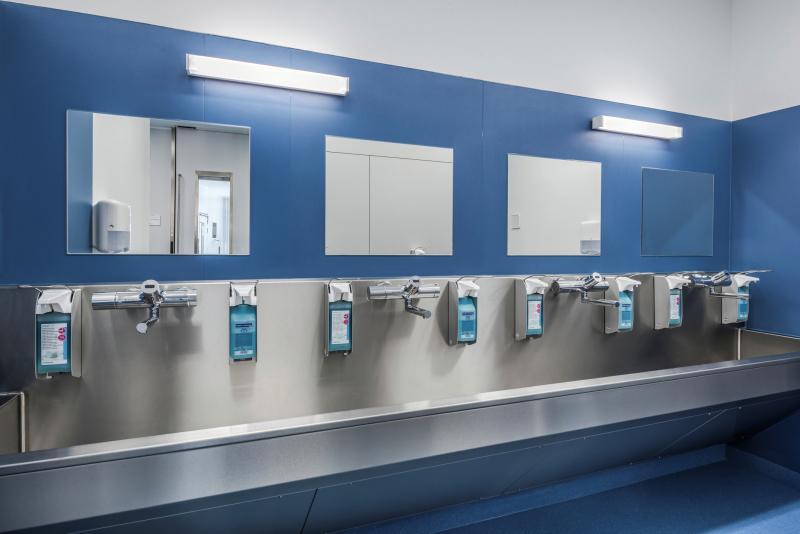
Best Taps for Hospitals in India: Sensor vs Elbow vs Foot-Operated
Choosing the right taps for a hospital is different from selecting bathroom faucets for a home, hotel or office. Hospital washbasins are used throughout the day by doctors, nurses, patients, visitors and housekeeping staff. The taps installed in these areas need to be practical, easy to operate, suitable for frequent use and simple to maintain.
One important decision during hospital construction or renovation is choosing between sensor-operated taps, elbow-operated taps and foot-operated taps.
Each type has its own advantages. Sensor taps provide automatic water flow, elbow-operated taps allow users to control water without using their hands, and foot-operated taps offer water control through a pedal.
But which is the best option for hospitals in India?
The answer depends on the location, frequency of use, plumbing arrangement, hygiene requirements and maintenance facilities of the hospital.
In this guide, we will explain the differences between these three types of hospital taps and help hospital owners, architects, builders, contractors and procurement teams make the right selection.
Quick Answer: Which Tap Is Best for Hospitals?
For hospitals and healthcare facilities, taps that reduce direct hand contact with operating controls are worth considering.
- Sensor-operated taps: Suitable for general hospital washrooms, patient areas and high-use locations where automatic operation is preferred.
- Elbow-operated taps: A practical choice for clinical handwashing areas where doctors and healthcare workers need manual control without using their hands.
- Foot-operated taps: Suitable for selected clinical, utility and wash areas where pedal-based operation is convenient.
There is no single tap that is ideal for every hospital. The right choice depends on the purpose of the washbasin and the hospital’s operational requirements.
1. Why Are the Right Taps Important in Hospitals?
Hospitals have different types of washbasins and handwashing stations. A tap installed in a doctor’s consultation room may have different requirements from one used in an operation theatre preparation area or a public hospital washroom.
The right hospital tap should offer:
- Easy handwashing for doctors, nurses and healthcare workers.
- Reduced direct contact with tap controls.
- Comfortable operation for different users.
- Consistent water flow and reliable performance.
- Easy cleaning of the tap and surrounding basin.
- Suitable water consumption for frequent use.
- Convenient maintenance and replacement of components.
Hospitals should also consider the complete handwashing station rather than selecting a tap alone. Basin depth, tap height, water pressure, drainage and soap dispenser placement all contribute to a comfortable and practical handwashing experience.
India’s National Centre for Disease Control highlights the importance of maintaining water systems and regularly cleaning and disinfecting point-of-use fixtures such as sinks and faucets. Therefore, tap selection should be part of a wider hospital hygiene and maintenance plan.
2. Sensor Taps for Hospitals: Automatic and Touch-Free Operation
Sensor taps, also known as automatic or infrared taps, operate when a user places their hands within the sensor’s detection range. Water starts flowing automatically and stops when the hands are moved away.
These taps are commonly considered for modern hospitals because users do not need to turn a conventional handle on and off.
How Do Sensor Taps Work?
A sensor detects the presence of hands near the water outlet. It sends a signal to an electronic control system, which activates a valve and allows water to flow.
When the hands move away, the system stops the water supply according to its programmed settings.
Advantages of Sensor Taps in Hospitals
- No need to operate a conventional hand-controlled handle.
- Convenient for frequently used washbasins.
- Automatic water shut-off after use.
- Suitable for public and patient-facing washrooms.
- Can support water-saving objectives when correctly selected.
- Provides a modern appearance for new hospital buildings.
Things to Check Before Buying Sensor Taps
Sensor taps contain electronic components, so hospital procurement teams should check the complete system before selecting them.
- Power supply: Check whether the model uses batteries or an electrical connection.
- Sensor performance: The sensor should respond consistently without unnecessary activation.
- Maintenance: Confirm that sensor units, solenoid valves and replacement parts are available.
- Water pressure: Check the operating pressure range against the hospital’s plumbing conditions.
- Cleaning: The tap body and sensor area should be accessible for regular cleaning.
- Installation: Ensure that the basin and tap position allow comfortable handwashing without excessive splashing.
Sensor operation alone does not guarantee hygiene. The complete fixture and plumbing arrangement must be selected and maintained properly.
Best suited for: General hospital washrooms, selected patient areas, outpatient departments and other high-use locations where automatic operation and maintenance support are available.
3. Elbow-Operated Taps for Hospitals: Practical Manual Control
Elbow-operated taps are designed so that users can operate the water supply using their elbow or forearm instead of their hands.
They are also commonly referred to as doctor taps, medical taps, surgical taps or long-lever taps, depending on their design.
These taps are particularly useful to consider in clinical environments where healthcare professionals need to operate the water supply without touching a conventional handle with their fingers.
How Do Elbow-Operated Taps Work?
An extended lever is fitted to the tap. The user pushes the lever with their elbow or forearm to start or stop the water supply.
The lever design and installation position are important. It should be long enough and positioned correctly so that users can operate it comfortably without needing to touch it with their hands.
Advantages of Elbow-Operated Taps
- Manual operation without using the hands.
- No electronic sensor or battery is required.
- Water flow can be controlled directly.
- Straightforward operation for healthcare staff.
- Suitable for selected clinical handwashing and utility areas.
- Practical for locations where automatic electronic controls are not preferred.
Things to Check Before Buying Elbow-Operated Taps
- The lever should be long enough for comfortable elbow operation.
- The installation should allow users to operate the lever without touching it with their fingers.
- The tap should provide suitable water flow and pressure.
- The lever mechanism should withstand frequent operation.
- The design should allow cleaning around the handle and tap body.
- Replacement parts and service support should be available.
A common mistake is choosing an elbow-operated tap without checking its installation requirements. If the lever is positioned incorrectly or is difficult to reach, users may end up operating it with their hands.
Explore CORSA Doctor Taps for Hospitals and Healthcare Projects
When planning handwashing areas for hospitals, clinics, nursing homes and diagnostic centres, choosing a suitable doctor tap can make everyday operation more convenient for healthcare professionals.
CORSA offers a dedicated doctor tap product range for customers exploring taps for medical and clinical applications.
If you are looking for doctor taps for hospitals in India, explore the CORSA Doctor Tap Range to learn more about the available product options.
Hospital owners, architects, builders, contractors and procurement teams can consider this range while planning their clinical handwashing and bathroom fitting requirements.
Best suited for: Clinical handwashing areas, selected treatment rooms, staff wash areas and locations where manual water control without direct hand contact is preferred.
4. Foot-Operated Taps for Hospitals: Water Control Through a Pedal
Foot-operated taps use a pedal or foot control to start and stop the water supply. Instead of touching the tap with their hands, users control the water through their foot.
This arrangement can be useful in locations where hands-free manual operation is preferred and where the pedal can be positioned comfortably.
How Do Foot-Operated Taps Work?
A foot pedal is connected to a water-control mechanism. When the user presses the pedal, water starts flowing through the tap. Releasing the pedal or operating the control in the designed manner stops the flow.
The exact working method depends on the model. Some systems use a mechanical pedal, while others may have a separate control arrangement.
Advantages of Foot-Operated Taps
- Allows water control without touching the tap handle.
- Does not depend on electronic sensors in mechanical models.
- Can be useful in selected clinical and utility wash areas.
- Provides direct manual control of water flow.
- Can be considered where pedal operation is more practical than electronic controls.
Things to Check Before Buying Foot-Operated Taps
- Pedal position: The pedal should be easy to reach without creating an obstruction.
- Operating comfort: Staff should be able to use it comfortably during repeated handwashing.
- Mechanical strength: Pedal components should be suitable for frequent operation.
- Floor cleaning: The pedal and surrounding area should be easy to clean.
- Plumbing connection: Check the installation requirements before selecting the model.
- Maintenance: Confirm that the mechanism and replacement parts can be serviced.
Best suited for: Selected clinical wash areas, utility rooms, staff wash areas and other locations where pedal-based operation is practical.
5. Sensor vs Elbow vs Foot-Operated Taps: Main Differences
Before purchasing hospital taps in bulk, it is useful to understand how the three operating mechanisms differ.
| Selection Factor | Sensor-Operated Tap | Elbow-Operated Tap | Foot-Operated Tap |
|---|---|---|---|
| Operating method | Infrared or electronic sensor | Elbow or forearm lever | Foot pedal |
| Hand contact with control | Not normally required | Not normally required when used correctly | Not normally required |
| Electricity | Depends on model | Not normally required | Not normally required for mechanical models |
| Water control | Automatic | Manual | Manual |
| Maintenance | Electronic and valve components | Lever and valve components | Pedal and control mechanism |
| User convenience | High when properly adjusted | Good with correct lever design | Depends on pedal position |
| Installation | Requires suitable sensor and power arrangement | Requires correct lever positioning | Requires suitable pedal and plumbing arrangement |
| Main consideration | Sensor reliability and servicing | Lever reach and installation | Pedal access and floor cleaning |
Which One Should a Hospital Choose?
Choose sensor taps when automatic operation is important and the hospital can maintain the electronic system.
Choose elbow-operated taps when healthcare staff need direct manual water control without using their hands.
Choose foot-operated taps when a pedal arrangement is practical for the intended wash area.
The comparison is a selection guide. No single operating mechanism should be considered a complete replacement for proper handwashing and infection-control procedures.
6. Which Taps Are Suitable for Different Hospital Areas?
Not every washbasin in a hospital needs the same type of tap. Before preparing a purchase order, divide the hospital into different functional areas.
| Hospital Area | Tap Type to Consider | Main Selection Requirement |
|---|---|---|
| Main entrance washrooms | Sensor-operated | Convenient operation and regular use |
| Outpatient department | Sensor-operated or suitable elbow-operated | Easy use by different visitors |
| General patient wards | Sensor or elbow-operated | Reliability and ease of cleaning |
| Clinical handwashing areas | Elbow or foot-operated; sensor where appropriate | Hands-free operation and suitable basin design |
| Operation theatre scrub areas | Specialist clinical tap arrangement | Designed for the required scrub procedure |
| Laboratories | Elbow, foot or sensor-operated | Practical operation and cleaning |
| Staff washrooms | Sensor or elbow-operated | Regular use and maintenance |
| Utility and housekeeping areas | Foot-operated or suitable manual arrangement | Durability and ease of operation |
For operation theatre scrub areas and other specialist clinical spaces, do not select a general-purpose bathroom tap without checking the clinical design requirements.
The hospital’s infection-control team, plumbing consultant and project architect should approve the final specification.
7. Important Features to Check When Buying Hospital Taps in India
Apart from the operating mechanism, there are several other points that hospital owners and procurement teams should consider.
A. Material and Finish
The tap should be made from suitable materials that can withstand regular use and cleaning.
Check:
- Body material and construction.
- Surface finish and resistance to corrosion.
- Quality of internal valves and moving components.
- Compatibility with the cleaning products used by the hospital.
- Availability of replacement components.
Do not select a product only because it looks premium. The material and construction should match the intended application.
B. Water Pressure Compatibility
Hospitals may have different water supply arrangements, including overhead tanks, pressure pumps and central plumbing systems.
Before purchasing, check the tap’s recommended operating pressure and compare it with the pressure available at the installation point.
A tap that is not compatible with the plumbing system may deliver poor flow or operate inconsistently.
C. Water-Saving Performance
Hospitals use water throughout the day. A suitable low-flow tap can help reduce unnecessary water consumption when correctly selected for the task.
The Ministry of Health and Family Welfare’s guidelines for green and climate-resilient healthcare facilities discuss low-flow fixtures and sensor-operated taps as water-saving measures.
Actual savings will depend on the product’s flow rate, water pressure, usage pattern and installation.
D. Ease of Cleaning
A hospital tap should be easy for housekeeping teams to clean.
Look for a design that:
- Has accessible surfaces.
- Does not have unnecessary dirt-trapping gaps.
- Allows cleaning around the outlet and control mechanism.
- Is compatible with the hospital’s cleaning and disinfection procedures.
E. After-Sales Service and Spare Parts
A hospital cannot afford to keep important handwashing points out of service for long periods.
Before finalising a supplier, ask about:
- Warranty terms.
- Spare part availability.
- Service response arrangements.
- Sensor and valve replacement.
- Installation support.
- Product documentation.
8. Hospital Basin and Tap Design: Why Both Matter
One area that is often overlooked during hospital construction is the relationship between the basin and the tap.
Even a good-quality tap may not perform well if it is installed on an unsuitable basin.
The project team should check:
Basin depth: The basin should be deep enough to support comfortable handwashing and reduce unnecessary splashing.
Tap height: The outlet should provide sufficient hand clearance without causing water to splash outside the basin.
Water direction: The stream should not be aimed directly into the drain. The outlet position should be considered carefully to reduce splash.
Soap dispenser: Place the soap dispenser where users can reach it comfortably without unnecessary contact with the tap.
Drainage: Ensure that the basin drains properly and that the surrounding plumbing is accessible for maintenance.
Cleaning access: The basin, tap and nearby surfaces should be easy to clean as part of the hospital’s regular cleaning routine.
These details should be finalised during the plumbing and sanitaryware specification stage rather than after the building work is complete.
9. What Should Hospital Buyers Ask a Tap Manufacturer or Supplier?
If you are purchasing taps for a new hospital, nursing home, diagnostic centre or healthcare renovation project, ask the manufacturer or supplier the following questions:
- What tap operating options are available: sensor, elbow or foot-operated?
- What is the body material and finish?
- What operating water pressure is required?
- Are the products suitable for frequent commercial use?
- What is the expected maintenance requirement?
- Are spare parts available in India?
- What warranty applies to each product?
- Can product specifications and installation details be provided?
- Is bulk supply available for the complete project?
- Can the supplier help prepare a product selection or quotation based on project requirements?
For large healthcare projects, it is better to finalise the product schedule before placing the bulk order. This helps avoid differences in finish, fitting dimensions and installation requirements across different floors and departments.
10. Why Choose the Right Bathroom Fittings Supplier for Hospital Projects?
Selecting a supplier is as important as selecting the tap itself. Hospital projects often require multiple products, coordinated specifications, reliable supply and support during installation.
A suitable bathroom fittings manufacturer or supplier should be able to explain product specifications clearly and help the project team understand which products are appropriate for each application.
CORSA Bath is an Indian bathware brand established in 1996, offering bathroom faucets, showers, mixers, accessories and related bathroom products.
For hospital construction and renovation requirements, project teams can explore the following CORSA product categories:
- CORSA Bathroom Faucet Range – Explore bathroom faucet options.
- CORSA Doctor Taps – Explore doctor tap options for medical and clinical applications.
- CORSA Bathroom Product Categories – Browse different bathroom product categories.
- CORSA Bathroom Accessories – Explore bathroom accessories.
For project enquiries, share your required product categories, quantities, project location and expected delivery schedule through the CORSA Bath Contact Page.
Product suitability, operating mechanism and availability should be confirmed with the company before specifying any product for a clinical application.
11. Hospital Tap Selection Checklist for Architects and Procurement Teams
Before approving the final tap schedule, use this checklist:
- Identify the function of every washbasin area.
- Decide whether sensor, elbow or foot operation is appropriate.
- Confirm the material and finish.
- Check the operating water pressure.
- Confirm the tap dimensions and basin compatibility.
- Review water flow and water-saving requirements.
- Check cleaning and maintenance requirements.
- Confirm warranty and spare part availability.
- Obtain technical specifications and installation details.
- Get approval from the hospital’s plumbing and infection-control teams.
A planned selection process helps reduce last-minute changes and makes bulk purchasing easier.
Frequently Asked Questions About Hospital Taps
1. Which type of tap is best for hospitals in India?
Sensor, elbow-operated and foot-operated taps can all be suitable for different hospital applications. Sensor taps offer automatic operation, elbow taps provide manual control through an extended lever, and foot-operated taps use a pedal. The right choice depends on the location, user requirements, plumbing and maintenance facilities.
2. Are sensor taps suitable for hospitals?
Yes. Sensor taps can be considered for general hospital washrooms and selected clinical areas. Buyers should check sensor reliability, power supply, valve location, water pressure, maintenance and cleaning requirements before installation.
3. What is an elbow-operated tap used for in hospitals?
An elbow-operated tap has an extended lever that allows users to turn the water on or off using their elbow or forearm. It is considered for clinical handwashing areas where hand contact with the tap control should be reduced.
4. What is a doctor tap?
A doctor tap is a type of medical or clinical tap designed with an extended lever that can be operated using the elbow or forearm. It is commonly considered for hospitals, clinics and healthcare handwashing areas.
You can explore the CORSA Doctor Tap Range for available product options.
5. What is a foot-operated tap?
A foot-operated tap uses a pedal to control water flow. The user operates the pedal with their foot instead of touching the tap handle. It can be useful in selected hospital wash areas where the pedal can be installed and maintained properly.
6. Are foot-operated taps better than sensor taps?
Not in every situation. Foot-operated taps do not require electronic sensor operation in mechanical models, while sensor taps provide automatic activation. The decision depends on operating convenience, maintenance support, installation conditions and the purpose of the washbasin.
7. Do hospitals need special taps for operation theatres?
Operation theatre scrub areas may require specialist tap and basin arrangements. The final selection should follow the hospital’s clinical design, plumbing and infection-control requirements. A standard domestic faucet should not be assumed to be suitable.
8. What material is suitable for hospital taps?
The material should be selected based on the intended application, corrosion resistance, cleaning requirements, water quality and frequency of use. Buyers should review the product’s technical specifications instead of relying only on its external appearance.
9. Can sensor taps help save water in hospitals?
Sensor taps can reduce unnecessary water flow by stopping automatically after use. Actual savings depend on the sensor settings, flow rate, water pressure, usage pattern and maintenance.
10. What should be checked before purchasing hospital taps in bulk?
Check product specifications, operating mechanism, material, water pressure, basin compatibility, finish, warranty, spare parts, service support and delivery schedule. For clinical areas, obtain approval from the relevant hospital technical and infection-control teams.
11. Where can hospitals buy bathroom taps and fittings in India?
Hospitals can approach established bathroom fittings manufacturers and suppliers for product specifications and bulk project enquiries. Compare technical suitability, supply capability, warranty and after-sales support before placing an order.
Conclusion
Choosing the best taps for hospitals in India requires more than comparing prices or selecting the latest design. Sensor-operated taps, elbow-operated taps and foot-operated taps each have a role in healthcare buildings.
Sensor taps are useful where automatic operation is preferred. Elbow-operated taps offer straightforward manual control without using the hands. Foot-operated taps can be considered where pedal operation is suitable for the wash area.
For hospital owners, architects, builders and procurement teams, the most important step is to select the right tap for each location and check its compatibility with the basin, plumbing system and maintenance plan.
A well-planned hospital bathroom and handwashing specification can support convenient daily use, reliable operation and better water management.
Planning a hospital or healthcare project? Explore the CORSA Doctor Tap Range or contact CORSA Bath to discuss your bathroom fittings requirements and project enquiries.
- CORSA Doctor Taps
- CORSA Bathroom Faucets
- CORSA Product Categories
- CORSA Bathroom Accessories
- CORSA Contact Page
External Authority Links
- Ministry of Health and Family Welfare – Guidelines for Green and Climate Resilient Healthcare Facilities:
https://ncdc.mohfw.gov.in/wp-content/uploads/2024/06/Guidelines-for-Green-and-Climate-Resilient-Healthcare-Facilities_Feb2023.pdf - National Guidelines for Infection Prevention and Control in Healthcare Facilities:
https://www.ncdc.mohfw.gov.in/wp-content/uploads/2024/03/83538105781625557301.pdf - ESIC Hospital NQAS Score Card:
https://www.esic.gov.in/attachments/circularfile/8370716e57c26c3ccf56733c24764ab3.pdf


